Monday, 23 November 2026

‘Reflections on Community Psychiatric Nursing’ – 25 years on


The paperback and hardback editions
of the  book - published
25 years ago today 
It’s twenty-five years today since the publication of my first book, Reflections on Community Psychiatric Nursing. The publisher, Routledge, decided to print ‘First published 2002’ on the title page because it came out so late in the year that they considered it to be a 2002 release, but it was in November 2001 that it was first published.

I remember the box of my complimentary copies arriving. This is a special moment to relish for any author, but it was slightly ruined because the books arrived on the day we were having a new carpet fitted in our front room. A team of carpet fitters were busy at work – including an apprentice who’d made a mess of fitting a section of the new carpet. There was much debate among his stressed supervisors about how to remedy this.

Meanwhile, they’d decided they needed to remove the front door of the house, letting in the chilly November air. Amid this scene of carpeting confusion, the postman arrived and handed a parcel to one of the carpet fitters, who handed it onto me. I remember opening the box in the kitchen while my late wife and I, totally distracted by the endless problem-solving discussions of the carpet fitters, were unable to enjoy unpacking the pristine copies of my book.

It was only later, when the carpet dust had settled, so to speak, that I was able to allow myself a moment of pride and satisfaction at the newborn hardback and paperback editions I held in my hands. I’m still immensely proud of that book. As far as I’m aware, it was the first single-authored book about community psychiatric nursing written, not by a nurse academic, but by a practising community psychiatric nurse. So much has changed in the intervening years, of course, that it’s now not so much a useful practical guide to contemporary practice as a curious historical artefact documenting how mental health care was provided at the start of the 21st century.

The worlds of nursing, mental health care and book publishing have all changed beyond recognition. Nowadays, it’s rare to find nursing students who would buy a personal copy of a textbook – they’re more likely to ‘borrow’ the eBook version from their university library. Back then, I know lots of nurses and nursing students bought it in paperback because I’ve met many who told me how useful they found it. I’d also receive regular royalty statements from my publisher showing the number of copies sold which was very gratifying. By the time my second book was published, academic publishers were paying a modest flat fee rather than royalties and only expected libraries to purchase hard copies.

Now that I’ve retired from mental health nursing, I no longer write about healthcare but I am still writing both non-fiction and fiction - and I’m currently working on my next book. This time, when the first copies arrive, I’ll make sure I’m not having any carpets fitted.

Tuesday, 13 October 2026

Juni Habel live at Shrewsbury Library - 4 October, 2026

Juni Habel 
When I reviewed Norwegian singer-songwriter Juni Habel’s album Evergreen in Your Mind on this blog back in June I didn’t imagine I would soon have the opportunity to see her play live. But I was lucky enough to see her in my hometown of Shrewsbury earlier this month, thanks to SY Gigs – an innovative music promoter who put on gigs 'for the curious.’ 

SY Gigs invite audiences to ‘slow down with quiet, alternative and reflective performances in some of Shrewsbury’s most beautiful and historic places.’ Juni’s music is certainly quiet and reflective and it would be hard to find a more beautiful and historic place than the Darwin Room of Shrewsbury Library (whose stone buildings date from the 16th century.)

Nick Jonah Davis
Nick Jonah Davis – a Derbyshire-based guitarist and composer – opened the show with a selection of his solo instrumentals on electric guitar, his Peter Green-inflected ambient music perfect for an early Sunday evening in October. 

The concert seemed to have been timed to take full advantage of the changing natural light seen through the tall, church-like windows, so that Juni’s set unfolded as the sun slowly set over the town.

Juni Habel
Juni performed her delicate songs with minimal chat  – the songs mostly left to speak for themselves. This was her last UK gig before returning to Norway and she told us how she had been impressed by what she’d seen of England, with its wide variety of trees. As she explained, Norway has a lot of trees but they’re mostly all pine trees!

The intimacy of the gig was highlighted by the audible string noise from the movement of Juni’s left hand on her guitar. This was a real ‘pindrop’ performance - understated but certainly highly appreciated by the audience - a little gem of a concert, destined to remain evergreen in our minds.


Friday, 2 October 2026

Further adventures in Scottish, Swedish and Icelandic music

Tìm by Mairearad Green
Landscape painter and musician Mairearad Green is from the Northwest Highlands of Scotland. The title of her album Tìm (pronounced ‘cheem’) is the Gaelic word for ‘time’ and it’s something of a meditation on the sense of being taken out of time by landscape, music and painting. I was expecting something more traditional – Mairearad plays small pipes and accordion as well as piano and, while there are some more traditional-sounding interludes like the instrumental ‘Camuscoillie’ and the title track, Mairearad’s songs are very contemporary, with a pleasing lo-fi pop sensibility, aided by producer Iain Hutchison’s subtle electric guitar and synths.

 ‘To the Ground’ has a slight Cocteau Twins feel and the whole album has a dreamy atmosphere. Tracks like ‘Old Dornie’ and ‘Knockan Crag’ are like musical landscape paintings and, indeed, the album was conceived as an integral part of one of Mairearad’s exhibitions at An Talla Solais art gallery in Ullapool.

Tìm is a beautiful and surprising collection that I’ve been listening to repeatedly. ‘Time and Tide’ – with its Beach House-like sound – deserves to be a Highland dream-folk hit.

Writing about the album’s theme, Mairearad observed, ‘The older I get the more I appreciate time and have a much clearer idea of how art and music never can be a waste of my time.’

Aster, Atlas by Sara Parkman
Swedish singer/composer Sara Parkman is another artist who chooses to place her faith in art and thereby find solace and restoration. Aster, Atlas is Sara’s fourth album and was, reportedly,  conceived after a period of exhaustion – though you might not guess judging by the outpouring of energy in her music.

Sara’s songs are sometimes meditative, sometimes epic in their arrangement and delivery. A recurring theme in Aster, Atlas is the idea of prayer and work – embodied in the Latin phrase ‘Ora et Labora’ (the phrase repeated with increasing urgency in the album’s closing track.) As Sara puts it, ‘I want the idea of prayer and work to be a source of comfort, hope and encouragement in the challenging times we live in. We must continue to work and believe in the common good.’ 

Many of the tracks on Aster, Atlas sound like a prayer – or an invocation. ‘Salomos vishet’ builds – Gorecki-like – from almost spoken word, through a kind of sprechgesang, to an insistent crescendo where Sara is joined by the choir, seeming  to spit out the words in a torrent reminiscent of Jacques Brel at his most vitriolic. Then, suddenly, the chorus melts away to end with an angelic coda.

Quieter moments of Aster, Atlas remind me of Enya and of the Norwegian folk band Aevestaden but there are great, dramatic, swelling moments with echoes of the Bulgarian choir of Le Mystère des Voix Bulgares. Unafraid to blend folk, rock and electronica, with a fiercely experimental musicality, Sara is perhaps a kindred spirit of those other uncompromising innovators Bjork and Kate Bush.

Muna by Lilja
If you’ll allow a bit more geographical and musical wandering, having taken in Scottish dream-folk and mystical Swedish folktronica, let’s head west again for some Icelandic/Norwegian jazz fusion. Muna is the third album by Lilja (the project of exceptional jazz guitarist Oddrun Lilja.) It’s a very disorientating record because it’s so musically diverse.

Opening track ‘Stillhetsveldit’ is a blistering seven and a half minutes, blending Scandinavian folk and Middle Eastern influences with Oddrun’s sinuous, sometimes deliciously distorted electric guitar – hypnotic and elegant – and enjoying exploring all the possibilities of the piece. The band are terrific musicians (Jo Skaansar on bass, Helge Norbakken’s percussion, Bugge Wesseltoft’s keyboards) and I could have happily listened to a whole album of this one opening track.

‘Groruddalen’ is another compelling gritty groove, with a guitar and rhythm section that could be at times desert blues, at times Zamrock. So, it’s a bit of a mystery why Lilja chose to intersperse these captivatingly groovy tracks with others like ‘Slowly, Gently’ and ‘Beloved One’ which feature different vocalists, English lyrics and acoustic guitars. These quieter, folkier tracks are beautifully-played and sung but don’t seem to belong on the same album. I’m all for creating contrast but the difference between the gritty, jazzier, rockier tracks and the sweet, gentle, songs is extreme and, while the musicianship can be enjoyed and admired in both styles, I found it confusing when taken as a whole. For all that, it’s definitely worth checking out ‘Groruddalen’ and ‘Stillhetsveldit’and Oddrun's guitar-playing is phenomenal.

Tìm by Mairearad Green (Buie Records)

Aster, Atlas by Sara Parkman (Supertraditional)

Muna by Lilja (Jazzland Recordings) 

Monday, 21 September 2026

Where Have I Been All This Time?

Newcastle
As summer turns to autumn, readers of this blog may have the impression that I haven’t done much travelling this year. The blog usually features a blend of music, books and travel (or, indeed, ‘time travel,’ as it says on the blog’s strapline.)  It’s true that recent blog posts have been dominated by music reviews (with the occasional gig or book review.) But, if anything, in 2026 I’ve done more travelling than usual – I just haven’t had time to write about! So, for the record, here’s a quick summary of my gallivanting so far this year.

Edinburgh
April saw me make what has now become an annual trip to Newcastle and Edinburgh which centres on the Nonsuch Dulcimer Club’s ‘Spring Fling.’ If you’re a member of this national society for dulcimer players you’ll have read about my adventures ‘up north’ in the autumn edition of Nonsuch News. If you’re not a subscriber to that esteemed publication, you’ll just have to take my word for it that, while in Newcastle, I visited some of the best pubs in Gateshead and,  while in Edinburgh, I got caught up (in the nicest possible way) in Northern Streams – a festival of Nordic and Scottish Music centred around the Scottish Storytelling Centre.

Totnes, Devon
In May, I celebrated a significant birthday in a big way in Cardiff, with the help of lots of friends and family and a host of talented musicians in the form of two bands with whom I have the privilege of playing – dark-folk collective Bullo Pill and the delightful five-piece folk outfit Brandy for the Parson. Later in May, to some extent escaping the heatwave over central England, I headed south-west to the Devon town of Totnes – an idyllic few days in my campervan which involved a little busking with my dulcimer and a nostalgic revisiting of the South Devon Railway. I plan to write a piece based on this trip for a forthcoming issue of Nonsuch News so – once again – apologies to any blog readers who don’t subscribe!

Copenhagen
In June, I fulfilled a long-held ambition to visit Scandinavia, undertaking a seven-day journey with the tour operator Great Rail Journeys (sadly not sponsors of this blog – at least, not yet!) I visited Oslo, Stockholm and Copenhagen, mostly travelling by train. I’m currently writing a series of pieces on this adventure with a view to publication elsewhere. As no dulcimers were involved, these pieces won’t be published in Nonsuch News!

In July and August, I was back in my campervan in Gloucestershire taking in the Tewkesbury Live Festival and the Three Choirs Festival with a mixture of solo and band gigs, followed by a trip to Dorset for the Purbeck Valley Folk Festival.

Purbeck, Dorset
September has been fairly busy with more gigs and then, before the year is out, I’m planning one more trip away – this time writing and researching a book I’m working on.

In the course of all this travelling I’ve certainly gathered plenty of material for books, short stories, articles and songs. What I haven’t had is much time to let the dust settle, to reflect on my experiences and to put pen to paper. But we have the long winter days and nights for all of that.  


Wednesday, 22 July 2026

A World of Our Own - Cherry Red Records invite us to revisit the mid-sixties 'folk explosion'


Various Artists

A World of our Own: The UK & Irish Folk Explosion of 1965

Cherry Red Records

Being born in 1961 meant that a lot of the pop music I grew up listening to was infused by the folk revival of the mid-1960s. Itself drawing on blues and skiffle as well as traditional folk song native to the UK and Ireland, these folky vibes found their way into the pop songs I imbued from radio and TV. I'm not ashamed to admit that the first pop record I ever owned was The Settlers' infectious theme tune to TV series 'The Lightning Tree.' At the same time, it was the loose, jangly acoustic guitar solo on Unit Four Plus Two's 'Concrete and Clay' that made me want to play guitar, as much as the distinctive sound of the 12-string electric Rickenbacker of The Byrds' Roger McGuinn. So I was delighted to hear that the ever-reliable Cherry Red Records had released a compilation focusing on what they describe as the UK & Irish Folk Explosion of 1965.

Back in 1965, folk music was a very serious business. While The Beatles and The Stones had begun to reinvent pop music, a fervent army of artists throughout the UK and Ireland were engaged in an effort to interpret the folk tradition.

Shirley Collins, The Dubliners and Martin Carthy were delving into the tradition and reinvigorated it for more modern tastes. Donovan, Julie Felix and Vashti Bunyan were following in the wake of Dylan by taking elements of folk – storytelling, a simple accompaniment – to develop the concept of the ‘singer-songwriter.’ The Seekers, The Settlers and Unit Four Plus Two were mixing in ingredients from pop music.

At the heart of all of this, the acoustic guitar was often front and centre with some outstanding players – Davy Graham, John Renbourn and Bert Jansch are all represented here – but other acts got away with more rudimentary playing, compensated for with lashings of earnestness. Some sounded like they hadn’t yet learnt to have fun. After all, the sixties hadn’t yet begun to ‘swing’ but, before the year was out, The Byrds’ version of ‘Mr Tambourine Man’ and The Beatles’ ‘Norwegian Wood’ would demonstrate how to combine ‘folkiness’ with ‘cool.’

This new three CD compilation is not exaggerating when it refers to an ‘explosion’ of folk in 1965. There are 86 tracks collected here from as many artists. Some inclusions are a bit odd – Paul Simon, I suppose illustrates the transatlantic cross-pollination going on (with Martin Carthy teaching Simon ‘Scarborough Fair’, for example,) and Nico (who came to England in 1965 and found herself signed to Immediate Records.) 

As important as the physical discs is the lovingly-compiled booklet. Apart from the informative rabbit warren of the sleeve notes, listeners of a certain age will melt at the mere sight of images of the original singles, with their Pye and Decca labels. With thrumming 12-string acoustics and trilling voices, this music paved the way for folk-rock and psych-folk, where musicians really did seem to be striving for a world of their own.

Thursday, 9 July 2026

When the Yukon Came to Quatt

Diyet & The Love Soldiers
Live at Quatt Village Hall, Shropshire
14 May 2026

On the road between Kidderminster and Bridgnorth, just over the Worcestershire border into Shropshire, lies the village of Quatt. Quatt is home to only around two hundred people and the majority of them seemed to have turned up at the village hall on a pleasant May evening, like me, to enjoy some live music provided by Diyet and The Love Soldiers.

What’s remarkable about this is that singer/bassist Diyet and her band The Love Soldiers had travelled all the way from Canada’s Yukon territory – a journey of over 4,000 miles – on a tour that took in various parts of rural England before moving onto Belgium and the Netherlands. Diyet grew up in the ancestral lands of the Kluane First Nation people and her songs reflect her indigenous world view. She sings both in English and in her native language of Southern Tutchone.

Her multi-instrumental backing band is made up of Diyet’s husband and musical collaborator Robert van Lieshout (who, impressively, plays acoustic guitar and drums at the same time) and award-winning producer Bob Hamilton (who switches effortlessly between electric guitar, pedal steel and mandolin.)

I wasn’t sure what the Shropshire audience would make of Diyet’s blend of Americana, alt-country and folk but they seemed to love it and the songs relating to Diyet’s First Nation heritage – and those sung in Southern Tutchone – received an equally rapturous reaction. Some of the songs are hard-hitting and deeply moving. In ‘Give Me a Reason’ Diyet sings of “the girls that are stolen ...and those that know something” and “for those who stop believing because justice is fleeting.”

The enterprising people who help run the Quatt Village Hall and organise events such as this (with the support of organisations like ArtsAlive) are to be congratulated for hosting such a remarkable band as Diyet and The Love Soldiers and the audience were rewarded with an emotional and uplifting performance.

Diyet & The Love Soldiers' new acoustic EP, 'Seeds Of Dreaming - ‘Acoustic Edition’ is an exclusive release for the UK, Belgium and the Netherlands in celebration of their spring 2026 tour.


Monday, 15 June 2026

Three albums to help us to spring into summer - new releases by Juni Habel, Amy Hopwood and Anna McLuckie

Juni Habel's
Evergreen in Your Mind 
As we ease into summer, I’m still enjoying three beautiful recent releases that arrived in a springtime flurry, like a succession of refreshing musical April showers. These albums are all by talented female singer-songwriters and, to my ears at least, they hark back – each in their distinctive ways – to the golden age of early 1970s folk and pop.

Norwegian Juni Habel’s third album Evergreen in Your Mind is an exquisite collection with simple but effective arrangements that would make a perfect soundtrack for snuggling down in your woodland cabin after a stroll in the rain. Many of the tracks were recorded in Juni’s home or on the piano at the school where she works. Her songs often have a plucked, repetitive accompaniment (as typified by the title track) and the whole effect reminds me of the music of Vashti Bunyan and Bridget St John.

Amy Hopwood’s Gone to Flowers is an altogether quirkier affair. It takes a playful approach to various aspects of mortality. Based on the south coast of England, Amy is a multi-creative – singer, songwriter, musician and animator – inspired by folklore and fairy tales, but her songs are nothing if not down-to-earth. The album opens with ‘A Nice Wooden Bench’: “But I think I’d quite like a bench / with a lovely old view of the sea / where strangers can quietly sit / And ponder their mortality...
Amy Hopwood's
Gone to Flowers 
” Amy shows her self-deprecating humour in ‘I’d Rather Be Older Than Dead’ while the gorgeous ‘She Became a Bird’ – an unflinching but hopeful song about death and release – moves me to tears on every listen.

There’s something childlike about Amy’s songs that reminds me of the music of Melanie (perhaps the use of pianos and recorders, combined with her whimsicality.) Yet, there’s a wit and wisdom in songs like ‘The Closest Thing to Holding Hands’ and ‘All Shall Be Well.’ Above all, there’s comfort and joy in these songs, exemplified by her Mexican Day of the Dead take on the traditional English folk song ‘Like a Leaf’: “What's the life of us each any more than a leaf / we all have our seasons so why should we grieve / for though in this wide world we work and we play / like a leaf we will wither and must fade away...”

Anna McLuckie's
The Little Winters
 
The Little Winters
is the title of AnnaMcLuckie’s new album, named after an American term to describe the late frosts that arrive during springtime. Anna is an Edinburgh-born nu-folk singer and player of the clarsach (Celtic harp.) If you’re expecting something quite traditional, think again. The rich arrangements, featuring contributions on bass, cello and banjo, add immense warmth to tracks like ‘New Northern Lullaby’  and ‘I Promise to Linger’ the music is as enticing as the cover art, which shows Anna and friends enjoying an afternoon tea of jam tarts and berries. In some ways, The Little Winters is the perfect album for the transition from spring to summer. In the jaunty ‘Jay Bird,’ Anna sings, ‘summer breaks out, it’ll break out into fever. Time is easy. I have plenty here...”

Juni, Amy and Anna are all touring the UK currently so try to catch them live if you can but, at the very least, seek out these refreshingly original albums. 
  • Juni Habel’s Evergreen in Your Mind (Basin Rock)
  • Amy Hopwood Gone to Flowers (Self-released)
  • Anna McLuckie The Little Winters (Hudson Records)

Thursday, 9 April 2026

The Pleasures of Reading Uneasy Tales – The British Library’s ‘Tales of the Weird’ series

I don’t read much modern fiction these days. The last few contemporary novels I’ve read have included Haruki Murakami’s Norwegian Wood, Tove Jansson’s The True Deceiver and Per Petterson’s Men in My Situation. You’ll notice those are by Japanese, Finnish-Swedish and Norwegian authors. The truth is that most British modern fiction doesn’t appeal to me. I’m also a fan of the short story form, finding that novels often fail to hold their initial attraction after a while. Many novels either lose momentum for me – or I lose the plot. I often get the impression the author is spinning things out, simply because a modern novel has to be 80,000-100,000 words.

I’m pleased to say, though, that The British Library has come to my rescue. Since 2018, they have been curating and publishing classic strange fiction in their Tales of the Weird series. There are now more than seventy of these handsomely-produced paperbacks and you can take out a subscription to receive a new one each month. So far, I’ve received – and enjoyed reading – a wonderful selection of novels and short story collections.

Weird fiction is hard to define. It’s usually set in a recognisably realistic world but one where supernatural things happen. It can be seen as a subgenre of speculative fiction that began to appear in the late 19th and early 20th centuries. It’s a kind of fiction that has elements of other genres (science fiction, horror and fantasy) but doesn’t necessarily conform to the usual tropes of those genres. This might explain why – although I don’t read sci-fi, fantasy or horror – I really enjoy weird fiction!

Edgar Allan Poe might be considered a founding father of the genre, and H.P. Lovecraft is often cited as a key figure (both have stories featured in the Tales of the Weird collection Spores of Doom – Dank Tales of the Fungal Weird.) But far from drawing on purely American writers, many of the books in the series feature stories from the heyday of British weird fiction, often by writers who might now be considered old-fashioned and quintessentially English. For example, stories by E.F. Benson, Walter de la Mare, Daphne du Maurier and Edith Nesbit are included in the short story collections Phantoms of Kernow – Classic Tales of Haunted Cornwall and The Wayfarer’s Weird – Wild Tales of Uncanny Rambles. I enjoyed these immensely but my favourite book in the series so far has been a novel – The Lost Stradivarius by J. Meade Falkner. First published in 1895, this is a compelling tale involving a bewitching piece of a music and a violin with a sinister history. It sounds like a bizarre premise for a plot but, unlike so many modern novels, it carried me with it right through to the end and I was struck by the originality of the idea and the confidence of the author’s voice. Falkner is best known today for Moonfleet (a tale of smugglers that’s become a children’s classic) but were it not for Tales of the Weird I’m sure I would never have discovered The Lost Stradivarius.

Of course, not every book in the series is to my taste. I admit I struggled with the stylistic quirkiness of Violet Hunt’s The Tiger Skin and Other Tales of the Uneasy. That said, ‘Tales of the Uneasy’ is another helpful way of thinking about weird fiction. Unease is a pervading mood in weird fiction (and is often all the more effective for it.)

I didn’t get on too well with Bird of Ill Omen – The Gothic Tales of Catherine Crowe, though the introduction tells an interesting and sad story about how Crowe seems to have suffered a psychotic episode in which she was found naked in the streets of Edinburgh, believing that spirits had rendered her invisible. It being 1854, this damaged her considerable literary reputation and, shamefully, even her contemporary Charles Dickens weighed in to make fun of her ‘madness.’

I did manage to finish E.H.Visiak’s novel Medusa, but it left me a bit baffled. It’s said to combine Conradian sea adventure with Atlantean mythology ...but I got a bit lost! Still, who can resist the book’s subtitle – ‘a novel of mystery, ecstasy and strange horror’? Surely we need more novels of mystery, ecstasy and strange horror and, thankfully, it looks like there is no shortage of them in the archives of the British Library.

The full range of The British Library's Tales of the Weird series can be found here. 

Monday, 9 February 2026

'A Passenger in Time' out of print


Back in 2009, I self-published a novel for children called A Passenger in Time. The story was set in 2005 and involved a young teenager – Jessica Martyn – who inadvertently travels back in time to 1955 in an adventure that involves a heritage railway. Almost as soon as it was published this book (which centred on the vagaries of time) became a victim of the real-life passage of time. In 2005, the central character Jessica did not have access to a smart phone but only a basic ‘flip phone’ while her younger brother, (with Spotify a decade away,) listened to his iTunes music on an MP3 player. Both devices play a role in the plot so, sixteen years post-publication, Jessica’s ‘present day’ of the 2000s would seem as odd and antiquated to today's children as the 1950s seemed to Jessica.

This problem (of the present dating as much as the past) was less of an issue for authors of earlier time travel books. Philippa Pearce’s classic Tom's Midnight Garden, for example, was published in the 1950s and involved time travel back to the 1880s but the technology is broadly the same in the book’s 'past' as it is in the book’s 'present.' Whether it's 1885 or 1955, railways use steam locomotives, telephones are not portable.

In 2010, I created this blog – Passengers in Time – partly to promote my book (and other books) and also to explore my other interest of music. That’s why the blog has the semi-serious ‘strapline’ adventures with books, music and time travel. Over the past fifteen years I’ve continued to blog about music and books that I like books and, less often, ‘time travel’ (by which I mean real-life travel often combined with a feeling of nostalgia, rather than – sorry to disappoint – actual time travel.) The blog moved on while the book that started it became more and more forgotten (by me, as much as by any potential readers.) The longevity of the book wasn’t helped by the publisher going out of business in 2016. As it was only ever available on print-on-demand, the publisher’s demise meant the handful of printed copies I held were the only ones available (apart from those that could be borrowed from public libraries and the copy held in the good old British Library.) A few kind friends and readers had suggested I republish it but, for all the reasons above, I felt it was something that had dated and was best left as a thing of the past.

I had all but forgotten about A Passenger in Time. And then, a few weeks ago, I performed at a folk club and was surprised when the host introduced me as ‘Tony Gillam – a singer-songwriter and writer,’ and went on to announce, ‘Tony is the author of a time travel novel involving steam railways...’ I’ve never had A Passenger in Time referred to at any of my musical performances and I wasn’t sure what the audience would make of it. I wasn’t sure what I made of it, to be honest.

The upshot of this mention of the book to the folk club audience was that, the following day, I received two enquiries from people who wanted to buy a copy. And the upshot of this unexpected level of interest was that, after sixteen years, no more copies of the book remain. A Passenger in Time is now, well and truly, out of print. The end of an era.

And what does this all tell me? First, that it might be possible to find a readership for my books in the audiences at my gigs. Second, it’s high time I got on and wrote another book.

Thursday, 22 January 2026

Radiating thoughtful beauty - Yosef Gutman’s 'Resisei Lyla' reviewed

I’ve been an enthusiastic follower of Yosef Gutman’s music since I reviewed his album Soul Song in 2023 (a collaboration with his friend, guitarist Lionel Loueke.) Gutman has an impressive stream of releases to his name – a dozen albums over the past seven years.

For those unfamiliar with Gutman, he was born in South Africa and grew up listening to American jazz fusion. Inspired by the music of Weather Report's Jaco Pastorius he put down his skateboard and took up bass guitar, winning a scholarship to study at Boston’s Berklee College of Music. He relocated to New York where, for many years, he was part of the city’s jazz scene and then, in 2009, he emigrated to Israel, taking a long hiatus from music.

By 2018 he had returned to music, using his five-string acoustic bass guitar to become both a prolific recording artist and the curator of Soul Song Records, a label Gutman founded to promote "modest, soulful music that radiates a thoughtful beauty." According to his website, the label “focuses on encouraging artists to create honest, improvised, and inspired music, regardless of religious background.” In some ways, for me, Soul Song Records fills the space once occupied by Wyndham Hill Records – an amazing community of musicians releasing instrumental music which is hard to classify but always life-enhancing. Some of Gutman’s albums are largely improvisational, others more composed - but they are always played exquisitely, with originality and verve, by a trusted team of musical collaborators.

As expected – based on Gutman’s previous albums – the latest release, Resisei Lyla, is a thing of great beauty, with Omri Mor (piano), Yoed Nir (cello), Itamar Doari (percussion) and Tal Yahalom (guitar) blending with Gutman’s acoustic bass guitar and double bass. Levitt sometimes plays surprising melody lines high on the extra top string of his bass, while Doari’s percussion is always subtle but perfectly judged. The simple act of putting this record on the turntable brings a big smile to my face but it’s also rewarding and fascinating to watch the videos of the studio recordings as a masterclass in how a group of musicians can play so instinctively and sympathetically together.

The music shifts effortlessly between traditional folk-like themes to jazzier excursions, often settling into a meditative mood. Most of the tracks are original Gutman compositions, and the album ends with an unplanned solo version of a traditional Moroccan tune from pianist Mor. Resisei Lyla is a deeply soulful, transformative and restorative journey. This album provides much-needed balm in a troubled world and Gutman has certainly succeeded in his mission to  create “soulful music that radiates a thoughtful beauty.”   

Resisei Lyla is released January 2026, available on LP/CD/DL from Soul Song Records.


Monday, 5 January 2026

My top ten albums of 2025

Summers & Silvova's
How To Raise the Wind
As the new year begins it’s a good time to reflect back on all the great new music that appeared in 2025. The past twelve months saw the release of a cavalcade of stunning new albums, from the driving Zamrock of WITCH’s
Sogolo to the meditative songwriting of Robin Adam’s The Beggar, through to innovative debuts like Kyson Point’s Underwater Sky and Anna Ling’s Light.


From Scandinavia came two vastly different offerings. The Norway-based Scottish/Finnish pairing of Sarah-Jane Summers & Juhani Silvova released How To Raise the Wind. This constantly-evolving duo take elements of Scottish and Norwegian folk, jazz and even a touch of Stravinsky to create a kind of groovy chamber music. Meanwhile, a darker side of Scandinavia is represented by the dark-folk of Wardruna. Their sound has become more expansive since 2021’s Kvitravn and, with Birna, we were taken on a journey into the world of the Old Norse she-bear. The result, which includes an all-female choir and the sound of ‘singing ice’ is immersive and remarkable.

(You can read my interview with Warduna’s Einar Selvik about the making of Birna here.)

Filkin's Drift's Glan
For sheer, gorgeous musicianship, we had Flook’s Sanju (a beautiful blending of flutes, guitar and bodhran.) Flook celebrated thirty years of music-making in 2025. With a similarly pristine sound – and using just fiddle and guitar – the duo Filkin’s Drift brought us Glan, a delicate album of Welsh folk songs and traditional English dance tunes. 

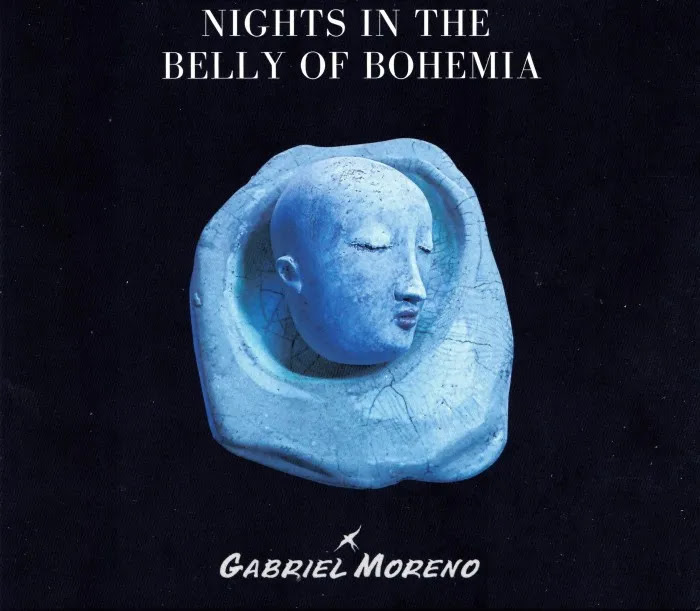
On the singer-songwriter front, 2025 brought us Gabriel Moreno’s consummate Nights in the Belly of Bohemia – a poetic marvel of an album, with songs that haunt and enthral. 

(You can read my full review of Gabriel Moreno's Nights in the Belly of Bohemia here.)

Anna Ling's Light
While I’ve long been an admirer of Gabriel Moreno, Scottish singer-songwriter Robin Adams was a new name to me. I was intrigued to learn Robin is the son of Chris and Pauline Adams (of one of my favourite 1970s folk-rock bands String Driven Thing.) Unlike his parents’ band, Robin’s music is quiet and reflective – unsurprisingly, since it deals with themes of bereavement and a slow recovery from a chronic illness. Robin’s vocal evokes something of John Martyn and other singer-songwriters of the 1970s. The beautiful songs on The Beggar reward repeated listening and deserve a wider audience.

Other corners of the UK produced some unexpected gems: from Devon we had singer-composer Anna Ling’s highly imaginative Light while, from Suffolk, the duo Kyson Point’s debut Underwater Sky featured accessible and memorable songs providing solace and hope.

WITCH's Sogolo
Veteran purveyors of Zambia’s Zamrock sound WITCH surprised us with another joyful and varied mix of psych-rock and afrobeat (with occasional echoes of Giorgio Moroder.) WITCH’s album Sogolo made most contemporary rock music sound tired and unimaginative. Finally, traditional Guinean music and Mandingo jazz were blended wonderfully in the music of Kaabi Kouyaté – an epic voice against a background of virtuosic musicians, fusing griotic tradition with contemporary music in Tribute to Kandia. 

I admit this is a very eclectic and subjective selection of my personal top ten albums of 2025 but I hope it introduces you to something you might have overlooked. For those of you who haven’t fallen out completely with Spotify I’ve even compiled an accompanying Spotify playlist that you can listen to here. 

So, in summary, here’s my Top Ten, with thanks and deep gratitude to all the amazing artists involved. Please support them by buying their music and seeing them live if you get the chance.

Okay, cue ‘Pick of the Pops’ music...

  1. Gabriel Moreno – Nights in the Belly of Bohemia
  2. WITCH – Sogolo
  3. Wardruna – Birna
  4. Kaabi Kouyaté – Tribute to Kandia 
  5. Kyson Point – Underwater Sky
  6. Anna Ling – Light
  7. Robin Adams – The Beggar
  8. Filkin’s Drift – Glan
  9. Flook – Sanju
  10. Sarah-Jane Summers & Juhani Silvola – How to Raise the Wind

Thursday, 18 December 2025

Jack Frost and a Darkling Thrush – fresh wintry and festive music

New Agent Starling single Jokul Frosti & Winter WonderBand’s new album Joy Illimited

As the year draws to a close I like to reflect back on some of the best music that’s been released over the past twelve months. I’m working on a special ‘Best of 2025’ blog post and may even do a personal Top Ten. But, as it’s only a week until Christmas, I thought I’d take a moment to highlight a couple of seasonal goodies.

First up, is a delightfully wintry concoction from Agent Starling. Readers of this blog will know that Agent Starling is a pleasingly eccentric collaboration between hurdy-gurdy player Quentin Budworth and bassist/vocalist Lou Duffy-Howard, joined by Dexter Duffy-Howard on violin and cello. In 2021 Agent Starling released their Northern Lights Trilogy and there’s something about the band’s sound which, like Sigur Ros and Cocteau Twins, perfectly conjures up winter. Now, Agent Starling have released Jokul Frosti, a preview track from their forthcoming album (due for release in spring 2026.) With its spoken-word lyrics, droning hurdy-gurdy, church bells and snow-swirls of violin, the song evokes the titular Jokul Frosti - the Norse mythological character who we know as Jack Frost, the embodiment of chilly weather. Lou has also devised a video for the single by artfully editing  a 1957 public domain Soviet animated version of The Snow Queen (see link below.)

The words, music and images create a delightfully chilling effect so typical of Agent Starling’s quirky (not to say slightly unhinged) output, and I can’t wait to hear the new album in 2026.

But, if a wintry single doesn’t satisfy your seasonal appetite, how about Joy Illimited – a fifteen-track album by Winter WonderBand. In fact, if fifteen tracks isn’t enough, the CD and vinyl release come with a bonus disc recorded live at Chapel Arts in Bath. Winter WonderBand features the astonishingly assured hammered dulcimer of Maclaine Colston, Jennifer Crook on lever harp and guitar, Beth Porter (cello, recorders) and Saul Rose (button accordions.) All four members share vocals. Jennifer is also credited with setting Thomas Hardy’s extraordinary poem The Darkling Thrush to music. This track opens the album and is the finest setting of poetry to music that you could wish to find. It also gives the band their name: “At once a voice arose among the bleak twigs overhead / In full-hearted evensong of joy illimited...”

Joy Illimited also includes splendid versions of The Coventry Carol, and some unexpected covers – George Michael’s Last Christmas gets the English folk treatment and there’s a rollicking rendition of Fairytale of New York. It all make a refreshing change from all the festive pop you’ll hear as you push your trolley around the supermarket this December.

You can watch the YouTube video of Agent Starling ‘s Jokul Frosti here: https://youtu.be/gYclRuVdUlc

For info and latest news on Winter WonderBand visit: https://winterwonderbandfolk.com/

Wednesday, 29 October 2025

After Red Guitars come... Undead Guitars

Back in 2022, I reported on this blog that I’d seen Red Guitars play at Birmingham’s O2 Institute. One of my favourite indie bands of the 1980s, I never imagined I’d have the chance to see them play live and I was hoping that the then recently-reformed band were due for a renaissance. But history repeated itself when lead singer Jeremy Kidd left the band for a second time in 2024.

The rest of the band’s solution was for guitarist Hallam Lewison to take on lead vocals, with the continued support of John Rowley (guitar), Lou Duffy-Howard (bass and backing vocals) and Matt Higgins (drums and percussion.) More radically, (and rather ingeniously,) they decided to rename themselves Undead Guitars – so it’s absolutely fitting that they should release a single in time for Halloween called Blazing Zombies.

Former Red Guitars fans won’t be disappointed as Blazing Zombies is, as you’d expect, a perfectly-crafted slice of guitar-driven rock, with intelligent, thought-provoking lyrics. Aren’t we all at risk, it seems to suggest, of becoming, metaphorically speaking,  the Blazing Zombies of the title?

While it’s all good end-of-October fun, the video is really rather terrifying (with band members and audience dressed in Halloween costumes and bassist Lou appearing to be gamely stabbing some nondescript thing towards the end of the song!) The record ends in a rather nice coda which hints at a more optimistic future or, at least, at survival after a zombie apocalypse.

I’m pleased to say Undead Guitars are working on an album and also planning a tour. Meanwhile, Blazing Zombies is available now on all the usual digital outlets and here, for your Halloween enjoyment, is the official video. 

Monday, 29 September 2025

Busking is a funny old business - Damian Clarke's 'Busking Business' reviewed

In my youth, I used to go busking quite a lot. A favourite spot in my home town of Shrewsbury was outside the public toilets in Butcher Row, on the corner opposite the Prince Rupert Hotel. This sounds a bit dodgy now that I come to write it down, but it really was all quite innocent  - and resulted in being invited to play in a pizzeria where, appropriately, I was paid in ...pizza. Less successful was my attempt to busk underneath the Magistrates' Court... while the court was in session. The bemused police officer accepted my apologies and I luckily avoided being charged with disturbing the peace, not to mention, contempt of court. 

In the early 1980s, my friend Jerry and I used to busk in Bangor High Street and took this to a new level when we joined in the street protest/party campaigning to save the local Theatr Gwynedd from closure. We must have done something right as the theatre remained open for a further twenty-five years. Footage of us busking outside Woolworths appeared on the local TV news and a grainy black and white photo of us, mid-song, was plastered over the front page of the North Wales Chronicle. 

It's only in the last few years that I've tried my hand at busking again, this time playing the mountain dulcimer rather than an acoustic guitar. With the encouragement of my friend Damian Clarke, I've busked in Dorchester and in Wimborne, as part of Wimborne Minster Folk Festival, (see previous posts on this blog.) I've also tried my hand in Bridgnorth, Shropshire and in Herefordshire, as part of Ledbury Fringe Festival.

If anyone is interested in trying out busking (or simply wants to know more about the life of a busker) you could do no better than to get a copy of Damian's new book, Busking Business (Vox Pop Publishing.) Damian, who plays the other type of dulcimer, is widely recognised for his indefatigable touring, accompanying his singing with both the hammered dulcimer and the hurdy-gurdy, in folk clubs, village halls and festivals – not only in the UK but across Europe. From medieval festivals and markets to the esplanades of seaside towns he's a familiar figure and a major proponent of the gentle art of busking. Damian has been busking for many years now, since he made the switch from art teacher to full-time musician. 

First published as an e-Book, Busking Business is now available for the first time in a handsome paperback edition. Part memoir, part handbook, the book distils Damian’s insightful and authoritative thoughts on busking. His skills as both an entertainer and a teacher make the book an enjoyable and instructive read. 

The book provides invaluable advice on finding suitable spots, avoiding being a nuisance to shopkeepers and interacting with the public, (what Damian calls ‘busking etiquette.’) He has clearly become adept at making it a worthwhile activity while avoiding some of the pitfalls. 

Damian discusses the stigma associated with ‘soliciting alms’ and the differences between busking and begging. He explores the historical origins of busking as well as his own personal journey, from the security of a teaching career to the vagaries of being a professional musician, and from being a guitarist in a band to being a solo player of more unusual instruments.

One of Damian’s helpful tips is that being something other than just another busker with a guitar is actually advantageous. He makes use of some amusing acronyms, one of which is BAGPUSSES (or Balding Acoustic Guitar-playing Performers Using Shiney Special Electro-acousticS.) He makes a virtue of offering something different from this ubiquitous type of busker. Passers-by are often intrigued and drawn towards unusual instruments in a way that they just aren’t to yet another guitarist on the street. 

The book discusses the pros and cons of busking amplification. Damian makes a good argument that singing and playing without amplification draws people closer and doesn’t intrude, although he concedes that quieter instruments (like my mountain dulcimer, for example,) might need some amplification.         

Readers may be surprised that the book deals with the business aspects of an activity that could be seen as alternative and non-mainstream, even, perhaps, subversive. I found parallels with Tom Hodgkinson’s book Business for Bohemians in the way both books balance idealism and pragmatism, making a living whilst living a good life.

There’s an enlightening chapter about Damian’s instruments – playfully titled ‘Summe Historie of the Hurdy Gurdy and Hammered Dulcimer,’ but the book is essential reading for buskers of any instrument and this is borne out by a chapter in which the author interviews other members of the busking community. 

Damian is a modest philanthropist – his Covered4Cancer CD continues to raise funds for Worldwide Cancer Research. Similarly, a percentage of the sales from Busking Business supports the homeless charity Shelter. Damian writes with empathy about people “living out in the open in our towns and cities,” many of whom he has met while busking.  

You can order a copy of the book directly from Damian or buy a copy from him in person, whenever you see him out busking! 


(A somewhat shorter version of this piece appeared as a book review in the Autumn 2025 issue of Nonsuch News - The Nonsuch Dulcimer Club Newsletter.) 


Monday, 16 June 2025

Some want honey - Gabriel Moreno's 'Nights in the Belly of Bohemia' reviewed

My favourite album of the year so far is 'Nights in the Belly of Bohemia' by Gabriel Moreno. This sixth studio album by Moreno shows the singer/songwriter at the height of his powers. The London-based Gibraltarian poet and musician explores the dilemmas of living authentically as an artist within an often-unsympathetic capitalist system. In ‘Lovers, Dreamers,’ he observes, “They’re selling cakes in Montmartre / which cost more than the art, / did you trade your Bedouin heart / for a hit in the charts, did the muse completely depart?...”

Using a nylon-strung guitar and a deep, dark voice, Moreno self-mythologises – he’s a defiant troubadour, “stuck,” as he sings, “in the belly of Bohemia,” that liminal space where artist and audience are free to share exuberance and deep meaning.

Moreno's sound – beautifully complemented by touches of violin, bass, percussion and piano provided by his Bohemian friends – is often compared to Leonard Cohen, but the ghosts of Baudelaire and Keats are also cheering him on from the wings. The opening tracks, ‘Edge of a Dream,’ ‘Lightning Bolt’ and ‘Bohemia,’ are all delightfully sing-along-able tracks yet Moreno never sounds trite or predictable. His unique lyrical style deploys romanticism, surrealism and symbolism, juxtaposing obscure words (‘ebullience,’ ‘splendorous,’) with slightly comical, everyday words (‘wonky,’ ‘fizzle.’)

His lyrics are often self-mocking, at times apologetic. In ‘Bohemia’ he sings, “I know that you need to go ‘coz someone has to keep / this boat afloat...” while ‘Castles’ begins, “Forgive me son, / there is no stash under the stairs...” and goes on “...I have no house in Hampstead Heath...” Poets and musicians are often not very rich, nor very practical. Unlike Arthur Ransome’s ‘Swallows and Amazons,’ Moreno admits, “...The books I own / won’t teach you how to sail or swim...” But perhaps there are other important things to pass onto our children: “I have no sports car on the drive, / typewriters, turntables bore truths that once kept me alive...” Moreno seems to be inviting his son to inherit his artistic sensibility: “...Take this pen, take this shield / to slay the beast of stagnation...”

The underlying themes of the album – the importance of nurturing our true nature, of allowing people to produce something of real value – seem to be encapsulated by a line from the closing track, ‘Churn Out Gold’: “some want honey and others want the bees to churn out gold.” The deeply-moving songs on Nights in the Belly of Bohemia – and the accompanying poetry book of the same title (published by Poetry Mondays Press) – are things of real value and testify that, although they may not yield a hit in the charts, the muse has certainly not abandoned Gabriel Moreno.

This is an extended version of my album review that appears in the June 2025 issue of Songlines magazine, #208.  

Both 'Nights in the Belly of Bohemia' - the album (Poetry Monday Records) and the poetry collection of the same title (published by Poetry Monday Press) are available now. 


Wednesday, 11 June 2025

Album anniversary, band projects and gallivanting

Busking at a 'busk stop' at
Wimborne Minster Folk Festival
 
It’s hard to believe that this week marks two years since the release of my album ‘In the Emptiness.’ One kind reviewer described it as a collection of “highly original songs and atmospheric instrumentals that captivate listeners with their unique charm...” (SLAP Magazine.) I had intended to release a follow-up album by now. I certainly have enough songs and tunes to fill another album but I seem to have got side-tracked. One challenge has been that I invested in a new digital interface to help with the recording process and familiarising myself with this seems, paradoxically,  to have slowed me down. But I’ve also become distracted by being much busier with solo performances and rehearsing with not one but two bands that I’ve joined in the past year.

First, there's Bullo Pill - a dark, experimental folk-rock collective based around Tewkesbury in Gloucestershire. We’ve been practicing regularly and did our first gig in February as part of the Gloucester Folk Trail. Then, there's the other band, Brandy for the Parson, based around North Worcestershire, with a vibe similar to the folk-rock bands of the late 60s/early 70s, (bands like Pentangle, The Strawbs and Fairport Convention.)

In between band practices and local solo gigs, I’ve been gallivanting to Newcastle (for a dulcimer-players’ ‘Spring Fling’), to Edinburgh (for some impromptu playing in some of the old town’s best pubs), to Somerset (for Dulcimers at Halsway Manor – the National Centre for Folk Arts) and, last weekend, to Dorset,  busking at various ‘busk stops’ at Wimborne Minster Folk Festival.

There are a few more gigs – and a few more festivals – before the summer’s out*, and then I’ve promised myself in the autumn I will make a concerted effort to record the tracks for the next album. You heard it here first!

* For up-to-date information on my gigs check my Facebook page or my website www.tonygillam.co.uk 

Monday, 5 May 2025

Musical escapology - David Harland's 'The Escapist'

One album I’ve been playing repeatedly since its release last autumn is David Harland’s The Escapist. If, like me, you’re a fan of the music that came out of Windham Hill Records, you’ll relish this record. On previous releases, Minneapolis-based guitarist Harland has explored singer-songwriter territory alongside instrumental music but here he offers us an entire album of exquisite solo acoustic guitar. Making full use of tapping, harmonics and unusual tunings, The Escapist would not have been out of place in the Windham Hill catalogue, alongside the music of William Ackerman, Michael Hedges and Alex de Grassi. 

Harland has certainly succeeded in his intention to create a meditative record to help listeners escape from the stresses of modern life. The cover art features a Magritte-esque image of a birdcage/head with the cage door ajar, suggesting worries have flown away. 

Here and there, there are sympathetic touches of cello and violin from Cierra Alise Hill and e-Bowed ambient electric guitar from producer Matt Patrick who also deserves credit for capturing the pristine sound of the album. If you're looking for a musical getaway, I can highly recommend The Escapist and I look forward to hearing more from this talented composer/guitarist. 

(This is an extended version of my album review first published in Songlines magazine #204 in January 2025.)